


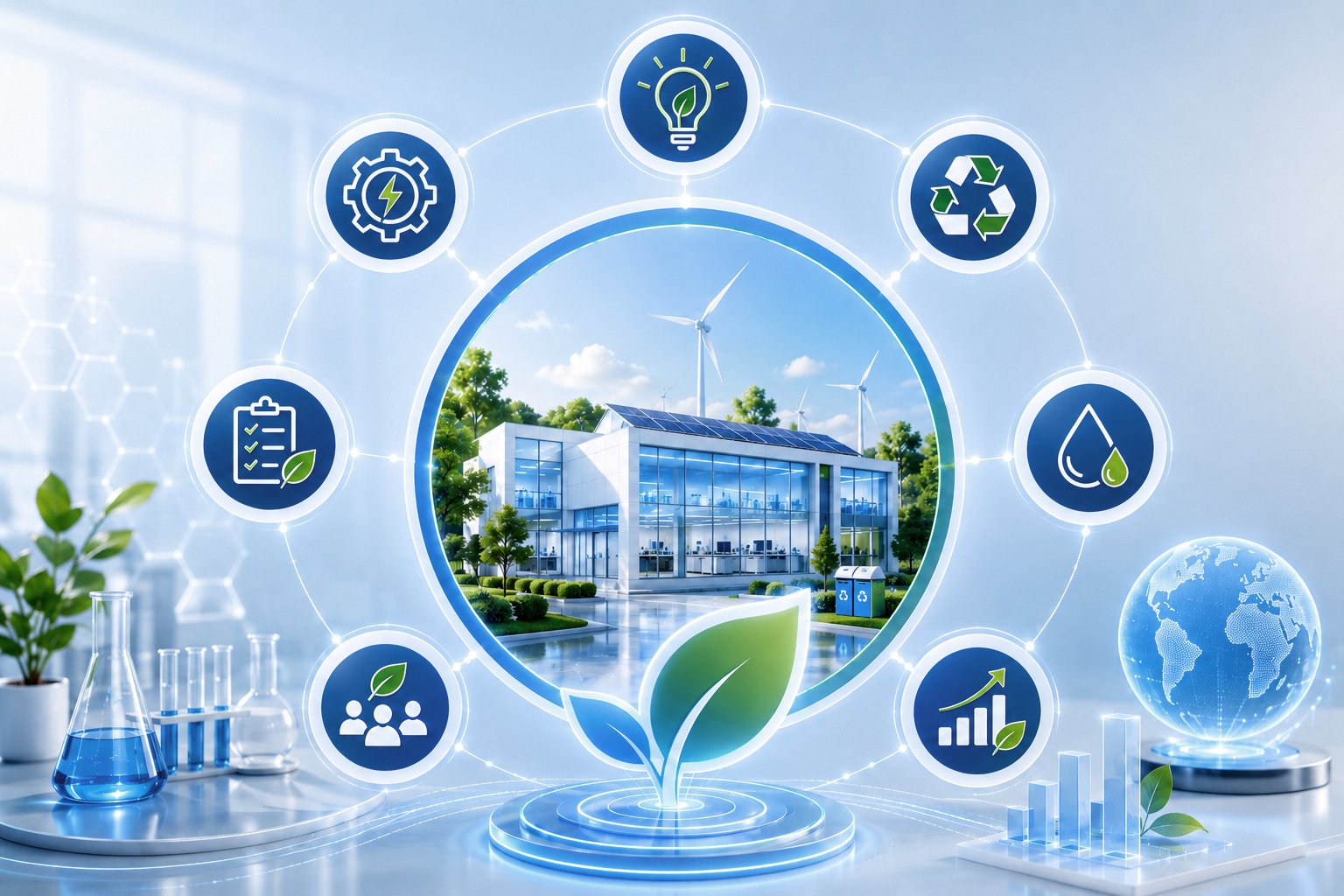
Rethinking Sustainability in the Scientific Environment
When we hear the word “green,” we often think of solar panels, recycling bins, energy-efficient lights or eliminating plastic.
But laboratories are different.
They require controlled environments, specialised equipment, ventilation, refrigeration, water, chemicals and continuous operations. In many cases, these requirements make laboratories significantly more resource-intensive than conventional office spaces.
So, can a laboratory really be green?
Yes — but a green laboratory is not one that consumes nothing. It is one that consumes thoughtfully.
What Makes a Laboratory Resource-Intensive?
A laboratory’s environmental footprint comes from much more than electricity.
It can include:
- Energy-intensive equipment
- HVAC and ventilation systems
- Fume extraction
- Refrigeration and cold storage
- Water consumption
- Single-use plastics
- Chemical waste
- Packaging waste
- Equipment replacement
- Laboratory construction materials
- Consumables and supply chains
This means sustainability needs to be considered across the entire laboratory lifecycle, not just in one area.
1. Start With the Laboratory Design
2. Think About Energy Beyond Lighting
3. Make Every Square Metre Work Harder
4. Reduce Waste at the Source
5. Water: The Resource We Often Overlook
6. Don’t Forget the Equipment Lifecycle
7. Design for Flexibility
8. Digitalisation Can Also Support Sustainability
9. Sustainability Should Not Compromise Science
10. Green Laboratories Are Built on Small Decisions
The Future of Green Laboratories
The laboratory of the future won’t simply be a laboratory with a few “green” features.
It will be a laboratory where sustainability is embedded into design, procurement, workflow, equipment selection, operations and lifecycle management.
The real question isn’t:
Can a laboratory be completely green?
Perhaps the better question is:
How much greener can we make every laboratory?
And that is where meaningful change begins.
At ALS – Advance Labs Scientific, we believe laboratory planning should look beyond immediate requirements.
A well-designed laboratory should be: Efficient. Safe. Flexible. Sustainable. Future-ready.
From lab consultation and turnkey projects to equipment selection and ongoing support, sustainability can be considered at every stage of the laboratory journey.