


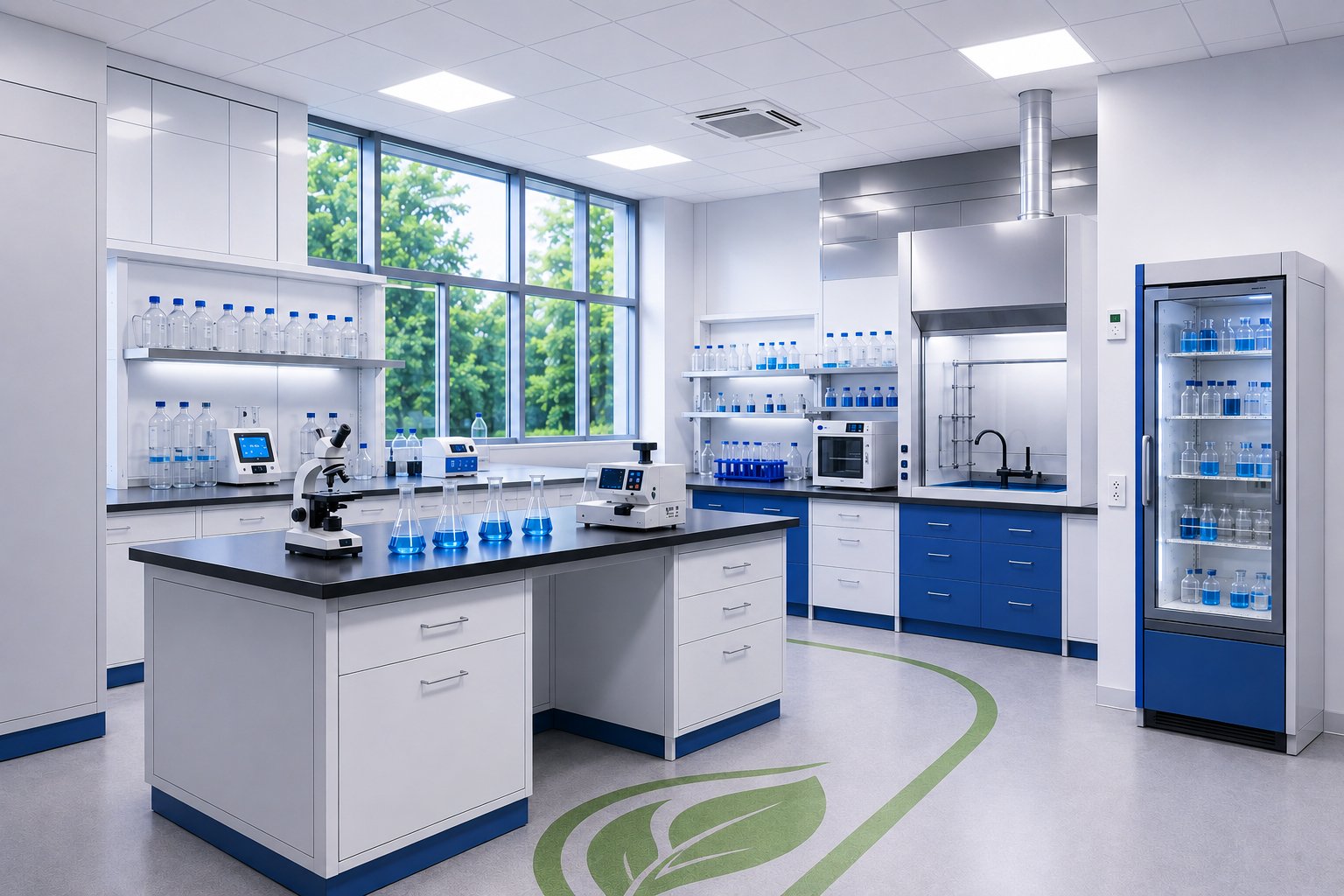
Building Greener Labs for a Better Future
When we think about sustainability, laboratories are not usually the first thing that come to mind. Yet laboratories consume significant amounts of energy, water, chemicals, plastics, and other resources every day.
Traditionally, sustainability initiatives in laboratories have been driven by regulatory requirements and compliance standards. While compliance remains essential, leading organizations are now recognizing that sustainability is much more than a checkbox, it is a strategic opportunity to improve efficiency, reduce costs, enhance reputation, and contribute to a healthier planet.
The question is no longer, “How do we comply?” but rather, “How can we create a laboratory that is both scientifically excellent and environmentally responsible?”
Sustainability Is Not About Compromise
One of the biggest misconceptions is that sustainable laboratories must sacrifice performance or productivity.
In reality, many sustainable practices improve operational efficiency while reducing environmental impact.
The most successful laboratories are discovering that sustainability and performance can work together.
Five Ways Laboratories Can Go Beyond Compliance
1. Choose Energy-Efficient Technologies
Laboratory equipment often operates continuously, making energy consumption a significant factor.
Modern scientific instruments and laboratory systems are increasingly designed to:
- Reduce power consumption
- Improve operational efficiency
- Minimize standby energy usage
- Support smarter resource management
Investing in energy-efficient technologies not only reduces environmental impact but can also lower operating costs over time.
2. Reduce Waste at the Source
Waste reduction starts with smarter planning.
Laboratories can:
- Optimize inventory management
- Minimize expired reagents
- Reduce unnecessary consumable usage
- Improve sample management processes
Small changes in daily practices can result in substantial long-term reductions in waste generation.
3. Extend Equipment Life Through Preventive Maintenance
Replacing equipment prematurely creates both financial and environmental costs.
Regular preventive maintenance helps:
- Improve instrument reliability
- Reduce unexpected breakdowns
- Extend equipment lifespan
- Improve overall efficiency
A well-maintained instrument is often one of the most sustainable assets in a laboratory.
Check our WE Care Services (Link to We care page)
4. Embrace Digital Transformation
Paper-based processes, manual record-keeping, and inefficient workflows contribute to unnecessary resource consumption.
Digital laboratory solutions can:
- Reduce paper usage
- Improve data accuracy
- Streamline operations
- Enhance traceability
- Support regulatory compliance
Sustainability is not only about reducing waste—it is also about creating smarter systems.
5. Build a Culture of Responsibility
Technology alone cannot create a sustainable laboratory.
True sustainability requires engagement from everyone, including:
- Laboratory managers
- Scientists
- Quality teams
- Procurement professionals
- Service providers
Simple habits such as responsible resource use, proper waste segregation, and continuous improvement can collectively create a meaningful impact.
The Future Laboratory
The laboratories of tomorrow will not be judged solely by the accuracy of their results. They will also be evaluated by how responsibly they use resources, manage waste, and contribute to a sustainable future.
Future-ready laboratories will combine:
- Scientific excellence
- Advanced technology
- Operational efficiency
- Environmental responsibility
The goal is not simply to do less harm, but to create greater value for science, society, and the environment.